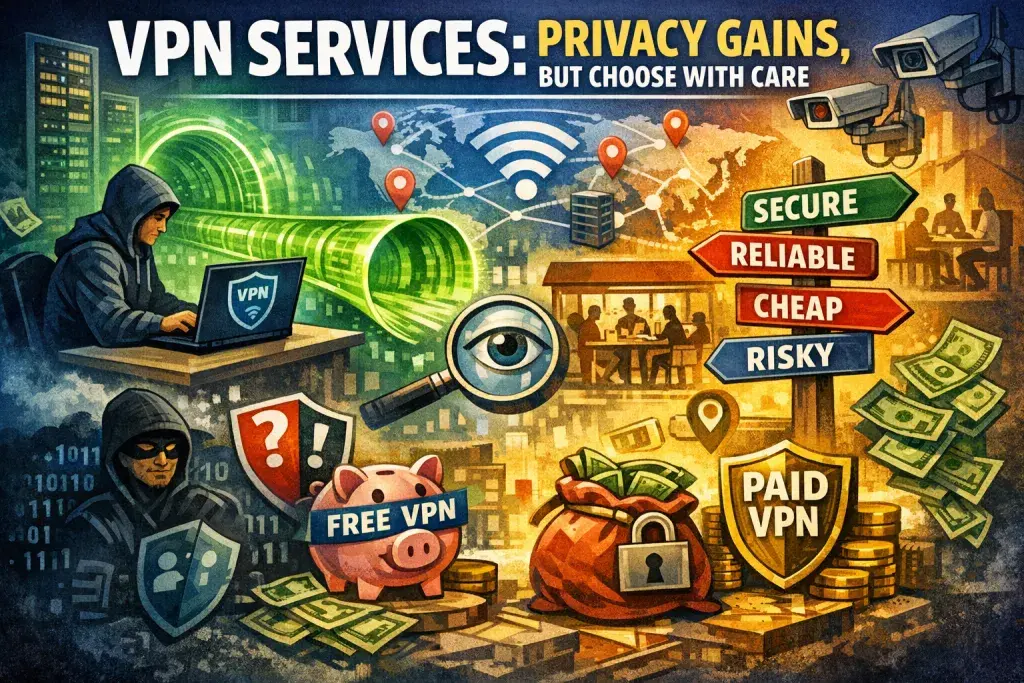
Virtual private networks have moved from niche security tools to mass-market subscriptions promoted across podcasts, video platforms, and social media. The appeal is real: a VPN can encrypt internet traffic, hide a user’s IP address from the sites they visit, and add a layer of protection on public Wi‑Fi. But the surge in marketing has also made it harder to separate genuine privacy tools from services that are merely convenient or cheap.
That matters because a VPN is not a magic cloak. It can reduce exposure to tracking and make casual interception more difficult, but it does not make a user anonymous, erase platform data collection, or compensate for weak passwords and poor device security. Picking the right service depends less on slogans than on what a person actually needs it to do.
What a VPN can do, and what it cannot
A VPN creates an encrypted tunnel between a device and a remote server operated by the VPN provider. That changes who can see what. An internet provider, local network operator, or someone on the same public Wi‑Fi network may have less visibility into browsing activity. Websites and apps, meanwhile, often see the VPN server’s IP address instead of the user’s home connection.
That protection has limits. A VPN provider can still become a central point of trust, which is why logging policies, jurisdiction, transparency, and technical safeguards matter. A VPN also does not stop websites from collecting data you hand over directly, nor does it block all forms of fingerprinting. For many people, the best way to think about a VPN is as one privacy layer among several, not a complete security plan.
Why free and paid options differ so sharply
Free VPNs appeal to cautious shoppers, and some are useful for testing. Hide.me and Windscribe stand out because their free tiers are generous enough to let users assess reliability before paying. TunnelBear also remains attractive for beginners who want a simple interface and a low-friction trial. Still, free plans usually come with tradeoffs: slower speeds, fewer server locations, lower data allowances, weaker streaming support, or limits on how many devices can connect at once.
Paid services generally widen the gap in areas that matter day to day. CyberGhost emphasizes server breadth, which can help users find less crowded connections and access region-specific libraries. IPVanish focuses on broad device support and unlimited simultaneous connections, a practical advantage in larger households. Private Internet Access and Hide.me lean harder into customization, offering tools such as split tunneling, multi-hop routing, and a wider range of protocol choices for users who want more control.
The tradeoffs behind the rankings
No single VPN is best for everyone because the category is shaped by compromise. Speed, privacy posture, ease of use, price, server reach, and streaming access rarely peak in the same product. CyberGhost’s large server network may appeal to frequent streamers, but inconsistent speeds can frustrate users far from their chosen endpoint. Hide.me offers unusually deep settings and modern protocol support, but that flexibility can feel intimidating to newcomers.
Private Internet Access is often better suited to experienced users who want to tune how traffic is routed, while TunnelBear is easier to understand at a glance. Windscribe’s customizable pricing may help people who dislike rigid subscription tiers. IPVanish offers strong household utility, though privacy-minded users may scrutinize ownership, jurisdiction, and past logging concerns more closely than headline features suggest.
How to choose a VPN without regretting the subscription
The smartest approach is to begin with use case, not brand recognition. Someone who wants safer browsing on hotel or airport Wi‑Fi has different needs from someone focused on streaming, torrenting, or protecting many devices under one roof. Trial periods, free tiers, and money-back guarantees are useful because they expose the details marketing often hides: connection stability, app design, support quality, and whether key features are available on the devices you actually use.
Choose simplicity if you are new to VPNs and do not plan to adjust technical settings.
Choose customization if you want protocol control, split tunneling, or advanced routing.
Check platform differences carefully; some features are missing on certain mobile apps.
Read the privacy policy closely, especially around logging, jurisdiction, and data requests.
The broader lesson is straightforward. A VPN can be a sensible privacy purchase, but only if buyers look past influencer ad reads and compare the service behind the pitch. In a market crowded with familiar names and hidden compromises, the most useful VPN is usually the one whose limits are clear before the subscription begins.